Runan Caycu (1973)
Director: Nora de Izcue Format: 35mm black and white, 35 min. Funding: DePaul University Archive work: 2022
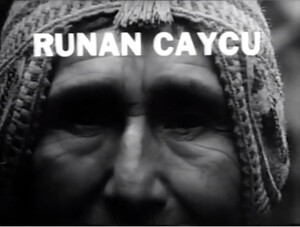
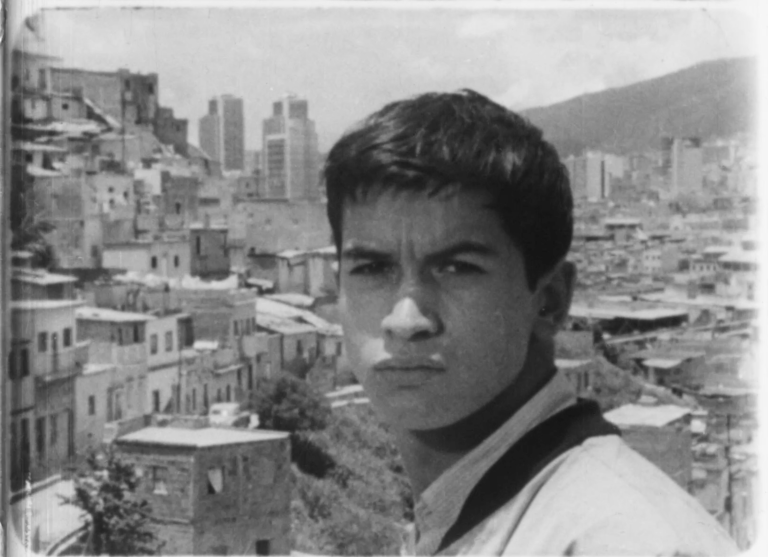
Nora de Izcue (Lima, 1934) is the first woman to direct a film in Peru and a founding member of the Fundación del Nuevo Cine Latinoamericano. Runan Caycu — a Quechua expression meaning “I am a man” — is her most emblematic work: a documentary that records the testimony of Saturnino Huillca, a campesino leader from the Cusco communities who led the rural rebellion movements in the years preceding the agrarian reform of General Juan Velasco Alvarado’s military government. Although the SINAMOS — the state entity created by the military government itself — prohibited its exhibition in cinemas, Runan Caycu won the Silver Dove at the prestigious International Documentary Film Festival of Leipzig in 1973. It was Runan Caycu that led De Izcue to be invited to join the Comité de Cineastas de América Latina, the collective of directors committed to the development of cinema in the region under conditions of dictatorship — and from which, in 1985, the Fundación del Nuevo Cine Latinoamericano was created, together with the Escuela Internacional de Cine y Televisión directed by Gabriel García Márquez. De Izcue was one of the few women among its founding members. OpenEdition + 3
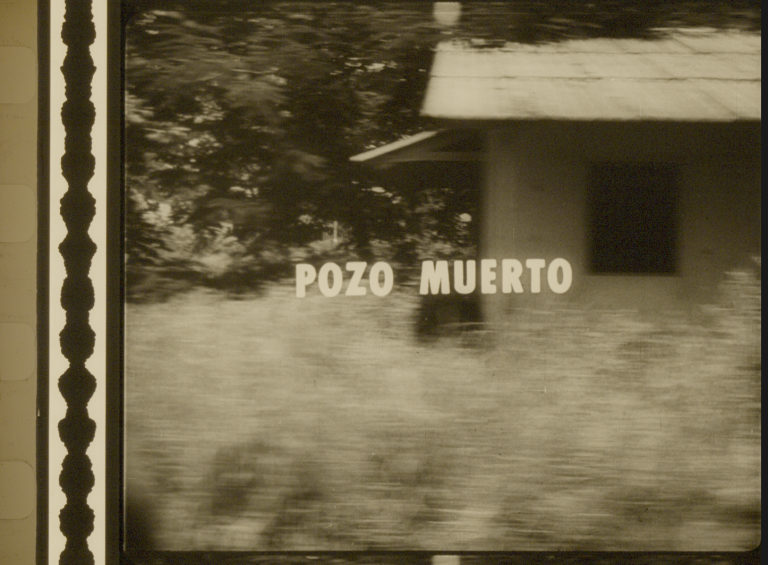
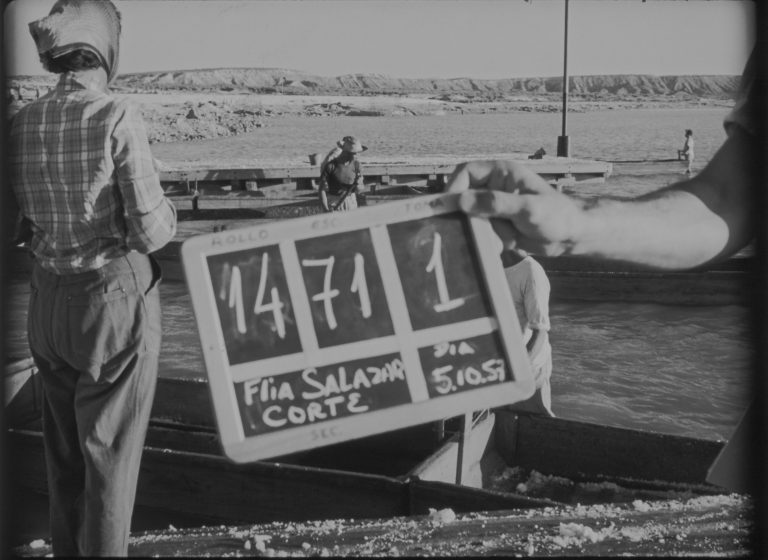
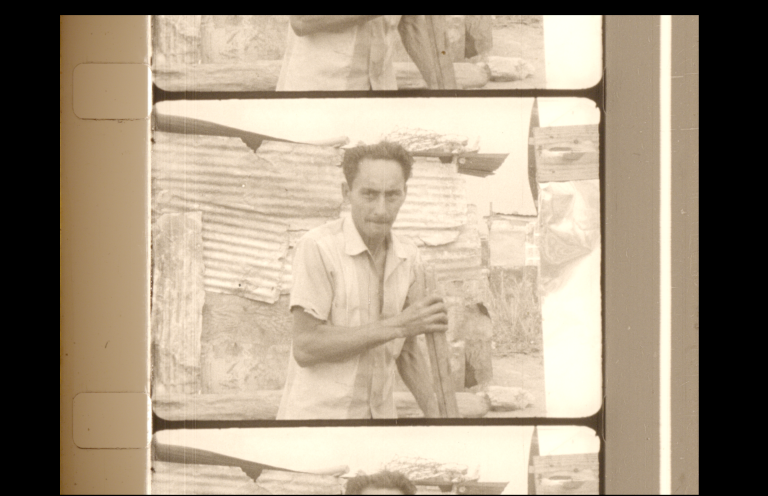
The 35mm print of Runan Caycu was located in Venezuela, in the collection of the Fundación Cinemateca Nacional de Venezuela. In 2022, I coordinated its physical transport to CINESA — the only professional film scanning facility in Venezuela — and documented the full digitization operation on site, recording the scanning process and the handling of the film elements. This was an archival production work: locating the film, managing its transfer, and ensuring the digitization process was recorded for institutional memory. The restoration and post-production were carried out by the technical team at CINESA, with Francisco Ramírez, Senior Archivist at the Cinemateca, present at every stage.
That a foundational work of Peruvian and Latin American political cinema was held in a Venezuelan archive — and that its digitization had to be funded by a North American university — is itself a document of the structural conditions of film heritage in the region. Runan Caycu was made to give voice to those whom the state rendered invisible. Its survival required, fifty years later, the same kind of lateral solidarity across institutions and borders that produced it.
Acknowledgements
This archival project would not have been possible without the institutional support of the Fundación Cinemateca Nacional de Venezuela and CINESA. Special thanks to Francisco Ramírez, Senior Archivist at the Cinemateca. Funded by DePaul University.