Araya (1959) Offtcuts Restoration Project
Director: Margot Benacerraf
Format: 35mm black and white
Funding: Cornell Society of Humanities
Margot Benacerraf (Caracas, 1926–2024) was one of the foundational figures of Venezuelan cinema. Trained at the Institut des Hautes Études Cinématographiques in Paris, she directed Araya in 1959 and later founded the Cinemateca Nacional de Venezuela in 1966. Araya is a poetic documentary-narrative hybrid regarded as a landmark of both neorealist and South American cinema — a work of such scale that Jean Renoir told Benacerraf after viewing it: “Above all… don’t cut a single image.” The film documents five centuries of manual salt extraction on the Araya Peninsula in northeastern Venezuela, structured around three families — the Salazar, Pereda, and Ortiz — whose lives unfold against a landscape of brutal labour and extraordinary visual beauty. It premiered at Cannes in 1959 and virtually disappeared for decades before its restoration and international redistribution by Milestone Films.
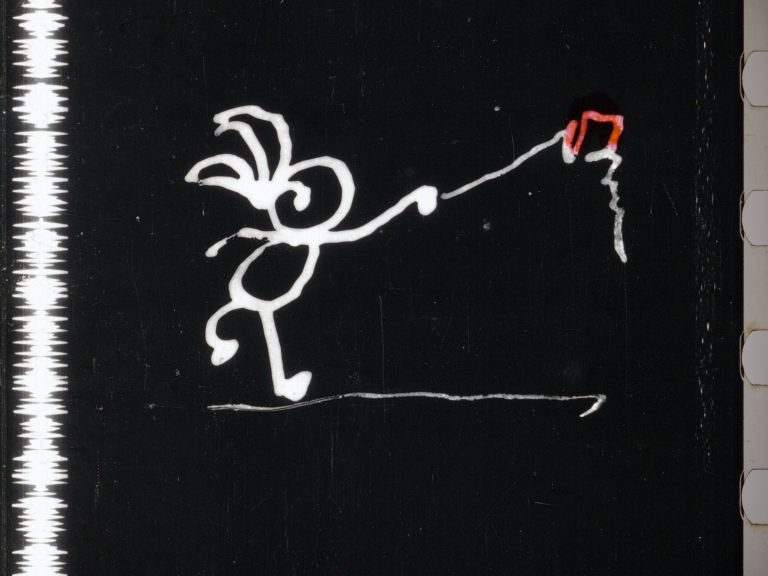
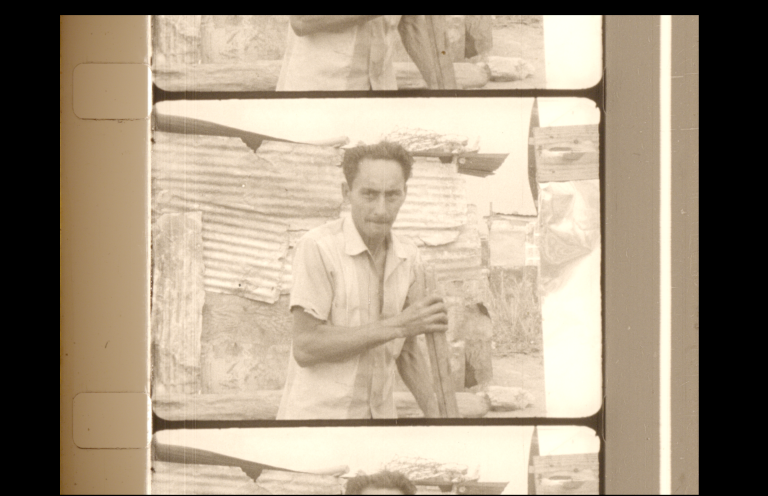
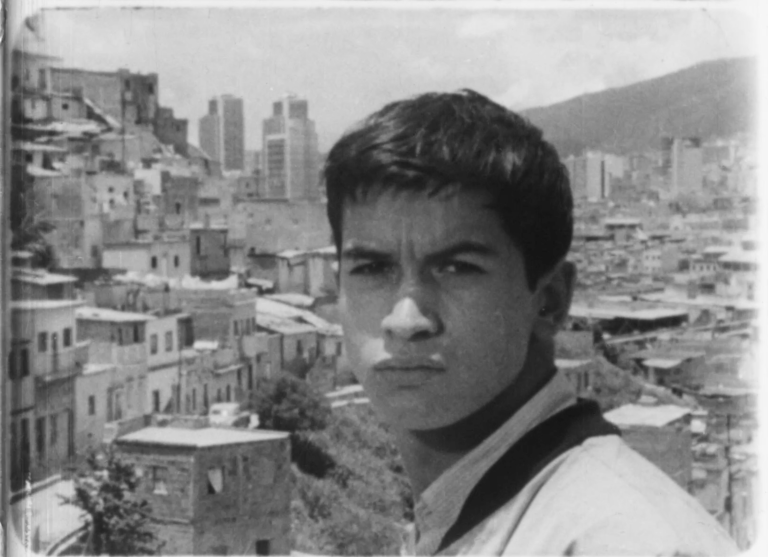
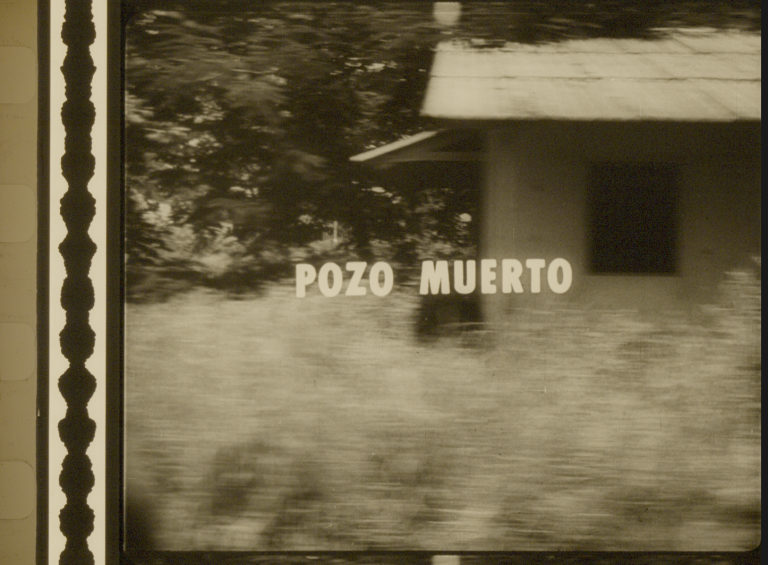
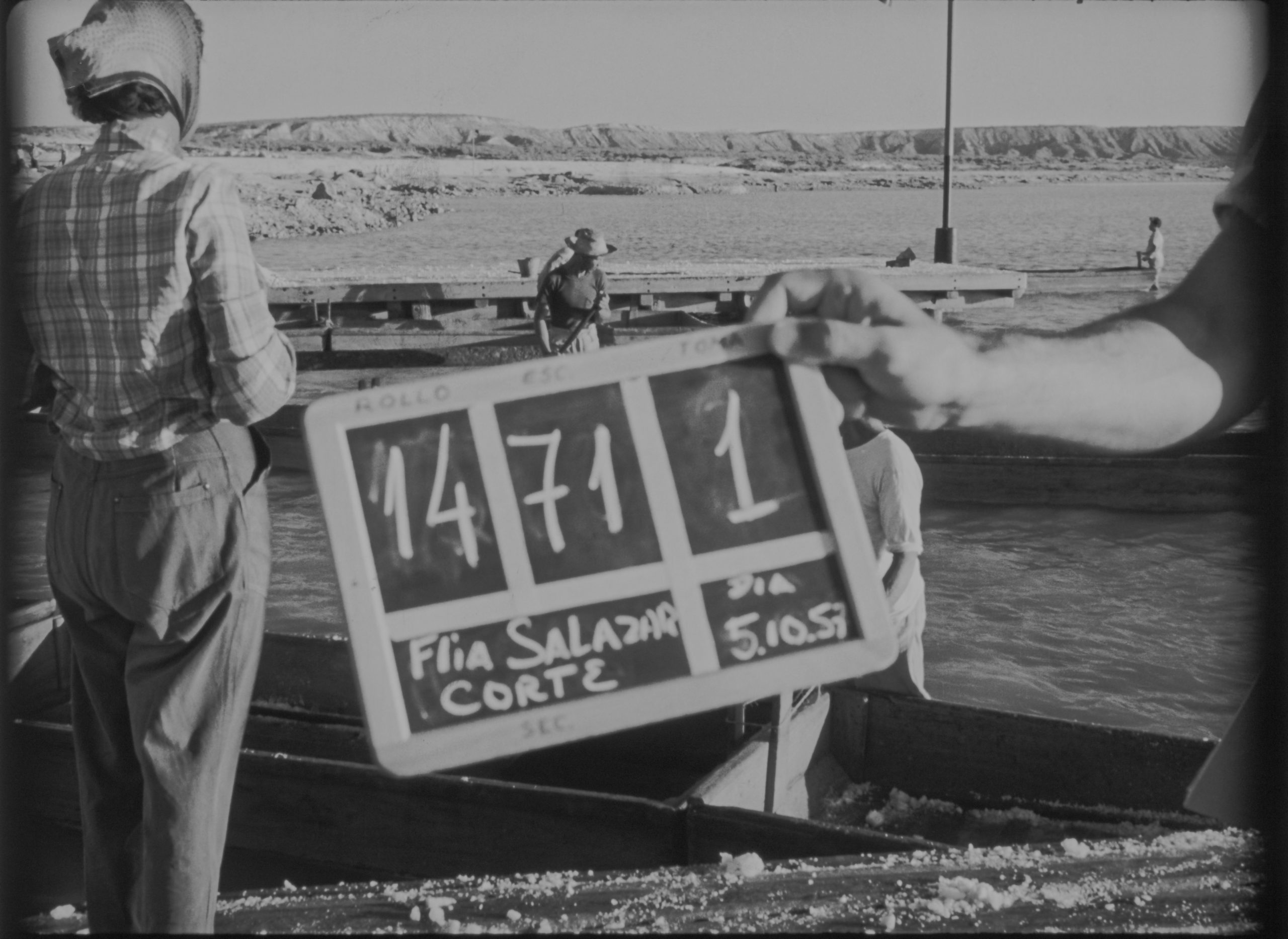
What no audience had ever seen — were the offcuts: the footage that Benacerraf excluded from the final edit. These reels, held at the Fundación Cinemateca Nacional de Venezuela, constitute a parallel archive of Araya: images of the same peninsula, the same families, the same light on salt and sea, filtered through a different editorial logic — or no editorial logic at all, preserved simply as material that was shot and set aside. They are not outtakes in the conventional sense. They are the negative space of one of the most precisely constructed films in Latin American cinema.
My work on this project was archival production: thanks to the reaseach of Lorena Cervera, I enter in contact with the different stakeholders and I made possible this project. I located the offcut reels within the collection of the Fundación Cinemateca Nacional de Venezuela, coordinated their physical transport to CINESA — the only professional film scanning facility in Venezuela — and documented the full digitization operation on site, recording the scanning and handling of the film elements. The research on this material produced a co-authored article written with Lorena Cervera and Vanessa Gubbins, published by Suny Press (New York). The offcuts were presented publicly for the first time at the 15th edition of Alchemy Film and Moving Image Festival in Hawick, Scotland, in May 2025, as part of the festival’s Venezuelan film strand. That screening — in a small town in the Scottish Borders — was the first time this material had been seen by an audience anywhere in the world. El Comercio
Acknowledgements
This archival project would not have been possible without the institutional support of the Fundación Cinemateca Nacional de Venezuela and CINESA. Special thanks to Francisco Ramírez, Senior Archivist at the Cinemateca, for his collaboration at every stage. Funded by the Cornell Society of Humanities.