Conejin (1975)
Director: José Castillo “Castillito” Format: 35mm, hand-drawn directly on celluloid Funding: Universidade Lusófona & Film Memory Programme
About the filmmaker
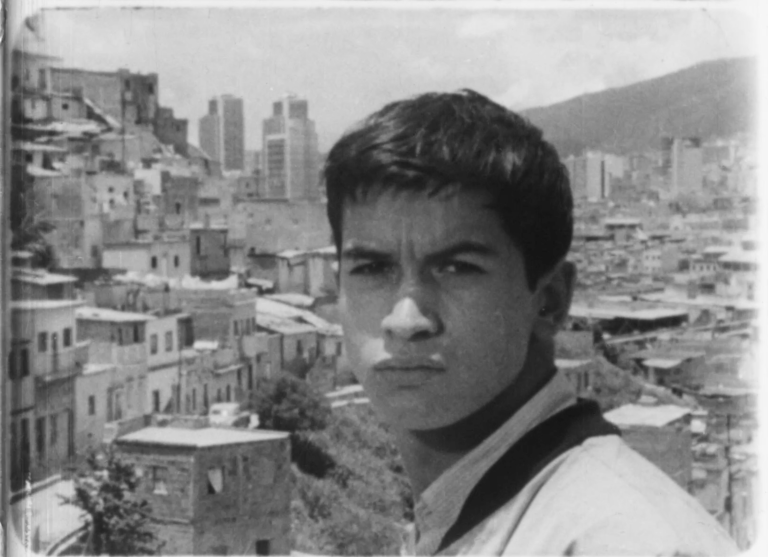
José Castillo (1922–2018), known universally as Castillito, is the pioneer of animated cinema in Venezuela. A journalist by training, he discovered his vocation through a cycle of films by the Canadian experimental filmmaker Norman McLaren — who drew directly onto celluloid frame by frame, without a camera — screened at the Universidad Central de Venezuela. After seeing McLaren’s work, Castillo said: “If he could do it, so can I.” The promise that launched his career was made to a child who had never seen an animated film made in Venezuela. Desde la Plaza
The Rodriguez Brother made this documentary abotu the life and work Castillito:
Inspired by McLaren’s direct animation technique, Castillo spent two years drawing his first film, Conejín, frame by frame onto a 35mm strip without emulsion. Unlike Disney, who relied on teams of painters to color his films, Castillo did every part of the work with his own hands. The finished film went on to win at the International Film Festival of Philadelphia, where it screened alongside Charles Chaplin’s A King in New York — the only Latin American film in the programme. Blogger + 2
Over a career spanning more than four decades, Castillito produced twenty films, including La hormiga de Hiroshima (1985), Fiesta (2001), and Vivir en libertad (2008), and received the Premio Nacional de Cultura, mención Cine, in 2012–2014. He died in Caracas on 14 June 2018, described by filmmaker Blanca Rey as someone who “became one with his dreams and his stories.” Elsoldemargarita
About the film
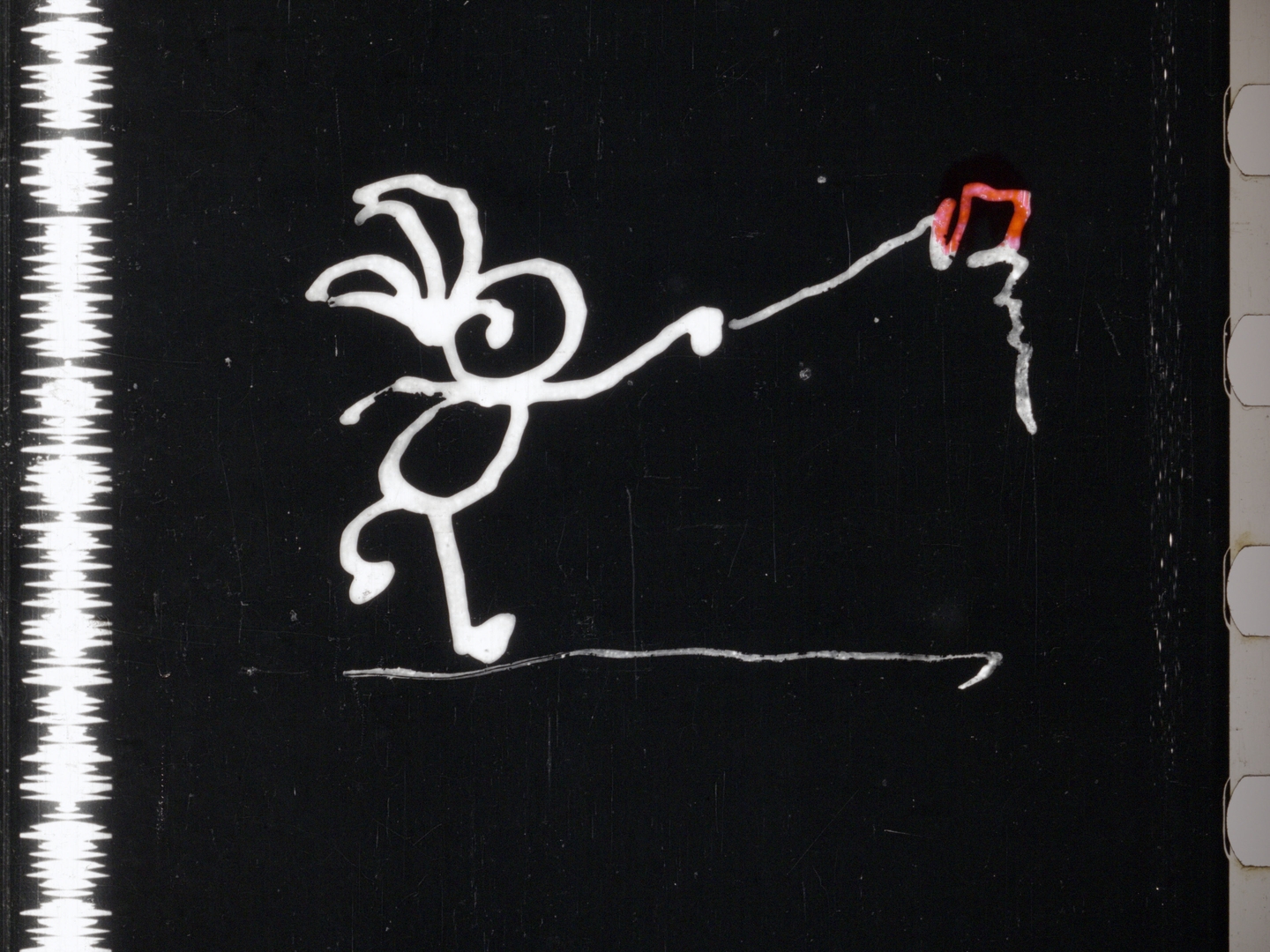
Conejín tells the story of a dreaming rabbit who flies across Caracas with the help of a kite — a character Castillito conceived as a version of himself, giving form to a childhood wish to fly over the city. The film lasts three minutes. It took two years to make. Every line visible on screen was drawn directly onto the celluloid by hand, frame by frame, at 24 drawings per second. There is no emulsion. There is no camera. The images exist because someone drew them, one by one, onto the film strip itself. Blogger
Conejín occupies a singular position in Venezuelan film history: it is at once the founding work of Venezuelan animation, an object of experimental cinema in the tradition of McLaren and Len Lye, and a material embodiment of what this restoration project has called the imperfect conditions of production — work made outside the industrial system, with minimal resources, by an individual committed to making something that did not yet exist in his country.
The materials and restoration
Digitized from a 35mm positive print held at the Fundación Cinemateca Nacional de Venezuela, using a Blackmagic Cintel Scanner G2 operated by CINESA. The inspection of the scanned material revealed the particular challenges of direct animation: the scratches and surface damage visible on the film strip are not always distinguishable from the drawn lines that constitute the image itself. Any aggressive scratch-removal filter risks erasing the work. Restoration was therefore performed with extreme restraint in Diamant Film Restoration Suite within DaVinci Resolve Studio, with every automated intervention manually reviewed frame by frame. Grain structure and the characteristic material texture of the hand-drawn lines were preserved in full.
This project also included a public screening of the restored Conejín at the Cinema Fernando Lopes of the Universidade Lusófona in Lisbon — a presentation that situated the film within the wider Latin American experimental and political cinema context explored by the Film Memory Programme, and marked the first European institutional exhibition of the restored version.
Acknowledgements
This restoration would not have been possible without the support of the Fundación Cinemateca Nacional de Venezuela and CINESA. Special thanks to Francisco Ramírez, Senior Archivist at the Cinemateca, for his collaboration at every stage. Funded by the Universidade Lusófona Film Memory Programme, Erasmus Mundus Joint Master in Film Memory.