La ciudad que nos ve (1967)
La ciudad que nos ve (1967)
Director: Jesús Enrique Guédez Format: 16mm black and white Funding: Universidade Lusófona & Film Memory Programme
VHS Version – Transfered to DVD
This video shows the original source material before any restoration or intervention.
Original Scanned Material 4K
This video shows the original source material before any restoration or intervention.
After Diamant Restoration
This video shows the original source material before any restoration or intervention.
Latest Restoration Version (Work in progress)
This video shows the original source material before any restoration or intervention.
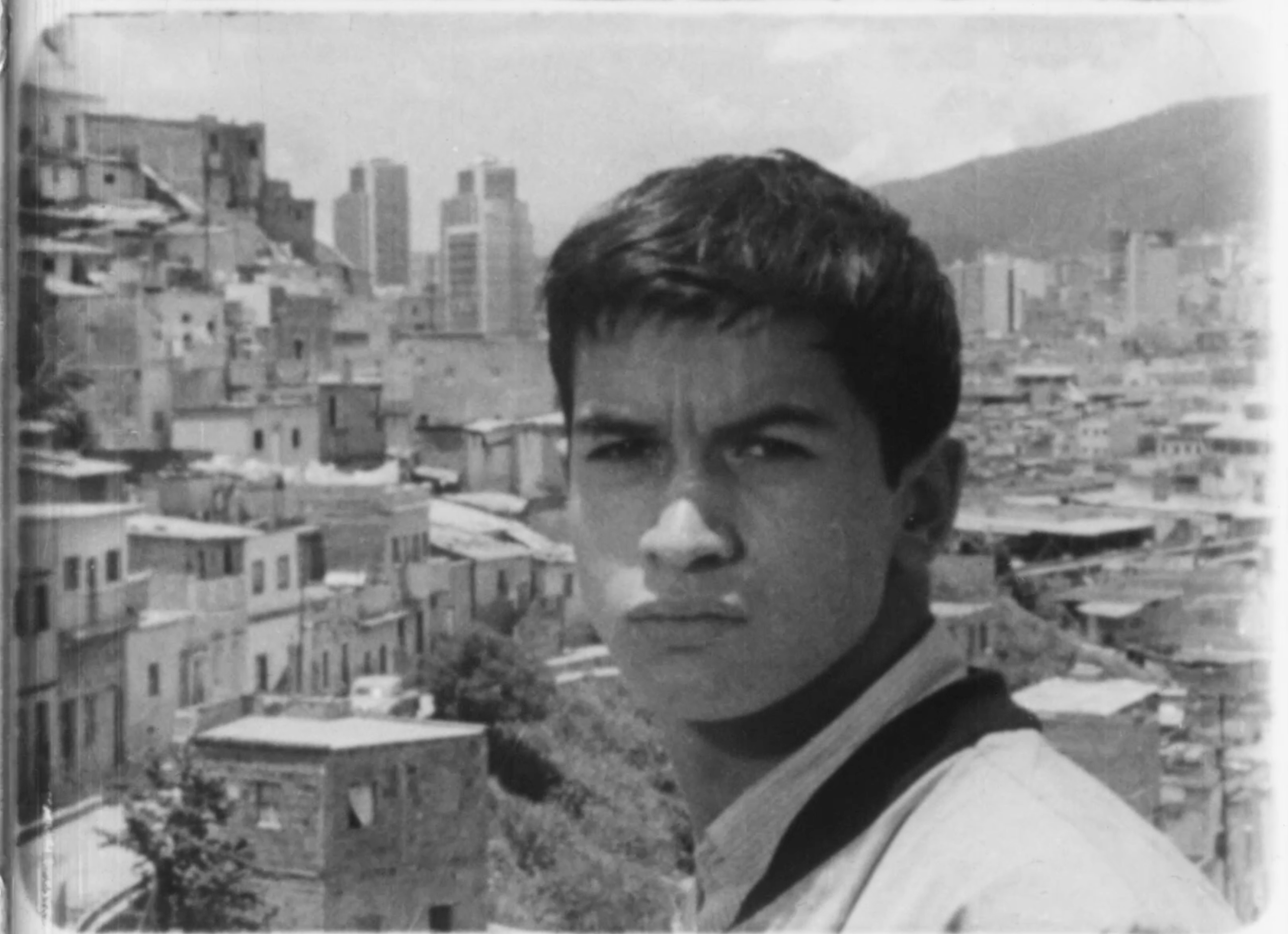
La ciudad que nos ve is one of the founding works of Venezuelan political documentary and of the cine urgente movement founded by Jesús Enrique Guédez. Trained at the Centro Sperimentale di Cinematografia in Rome and shaped by his encounter with Joris Ivens, Guédez developed what he described as a poetic approach to documentary — one in which image and voice do not illustrate each other but operate as parallel, sometimes divergent, registers of meaning. The film documents the cerros of Caracas: the hillside barrios where the city’s marginalized population lived outside the modernizing spectacle of the oil-funded capital. The city that sees, but does not see those who built it.
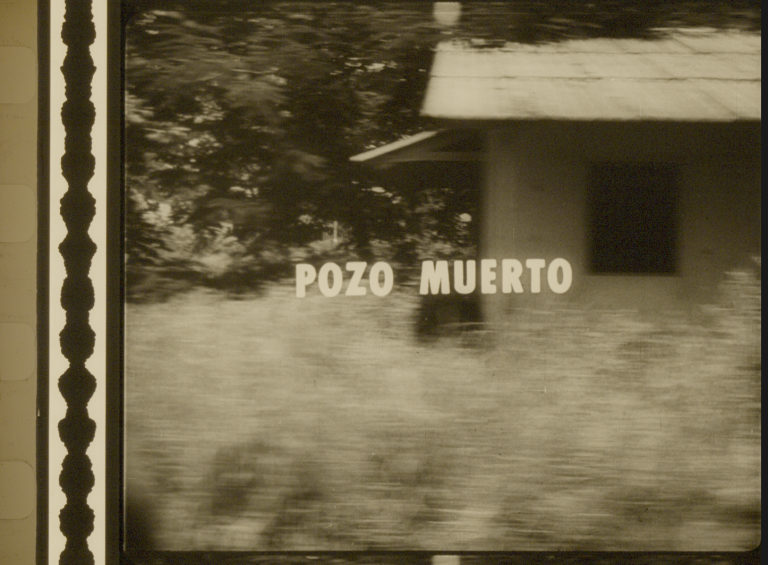
Film historian Julio Miranda situates La ciudad que nos ve at the origin of Venezuelan documentary history, alongside Pozo muerto, as part of the thirty-odd documentaries that between the late 1960s and early 1970s offered a particularly harsh and controversial account of Venezuelan social reality. Together, the two films form a coherent political argument: Pozo muerto documents the extraction zone; La ciudad que nos ve documents where that extraction economy displaces its people.
The materials
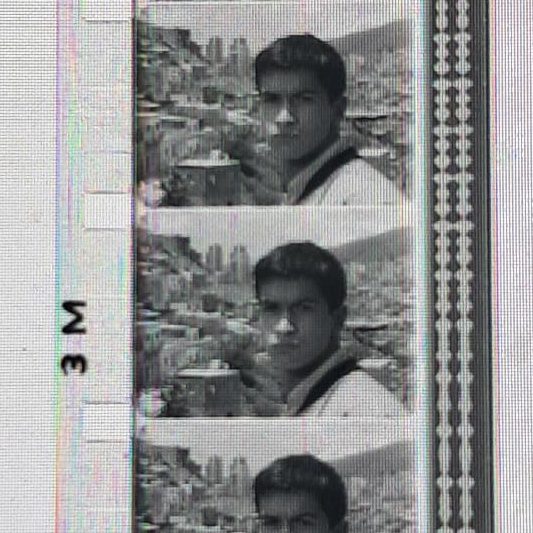
Digitized from a single 16mm positive print held at the Fundación Cinemateca Nacional de Venezuela, using a Blackmagic Cintel Scanner G2 operated by CINESA. The inspection of the scanned material identified two systemic defects running the full length of the film: persistent hard flicker — partly damage, partly a material trace of the film’s guerrilla conditions of production — and constant vertical scratches along the left margin of every frame, consistent with an exhibition print worn by repeated projection. The surviving element is a heavily used copy, not a preservation master. A further complexity: in several sequences, the spoken narration does not align uniformly with the image. This is not deterioration — it is an intentional directorial strategy, confirmed by comparison with earlier VHS and DVD reference versions and consistent with Guédez’s stated poetic-documentary approach.
The restoration
Image restoration was performed in Diamant Film Restoration Suite within DaVinci Resolve Studio, on DPX sequences transcoded from the original CRI scans at 12-bit depth. The deflicker correction was applied conservatively — reducing the most distracting occurrences without erasing the film’s characteristic temporal instability. As Julia Wallmüller has argued, interventions that eliminate all visible imperfection impose a false standard of image quality historically inappropriate to works produced outside the industrial system. The scratch repair filter required a full transcode of the film to DPX, increasing per-frame file weight from approximately 5MB to 17MB. Grain structure was preserved throughout. No denoising, sharpening, or frame interpolation was applied.
Color grading was guided by the Ansel Adams zone system, using DaVinci Resolve’s waveform and histogram scopes to restore the full tonal range compressed by photochemical deterioration, without imposing artificial perfection. Audio restoration was performed in iZotope RX, with final mixing and synchronization in Pro Tools.
The result is an imperfect restoration — honest about its constraints, committed to access. This is the only kind of restoration these films have ever had available to them. It is enough.
Acknowledgements
This restoration would not have been possible without the support of the Fundación Cinemateca Nacional de Venezuela and CINESA. Special thanks to Francisco Ramírez, Senior Archivist at the Cinemateca, for his collaboration at every stage of the process. Sincere gratitude to Miguel Guédez — filmmaker, professor, and son of Jesús Enrique Guédez — for sharing his knowledge of his father’s work and for signing the license that made this ongoing restoration possible.
Funded by the Universidade Lusófona Film Memory Programme, Erasmus Mundus Joint Master in Film Memory.