Pueblo de lata (1972)
Director: Jesús Enrique Guédez Format: 16mm black and white, 20 min. Funding: Universidade Lusófona & Film Memory Programme.
Direct Scanned Material
VHS transfer to DVD Version
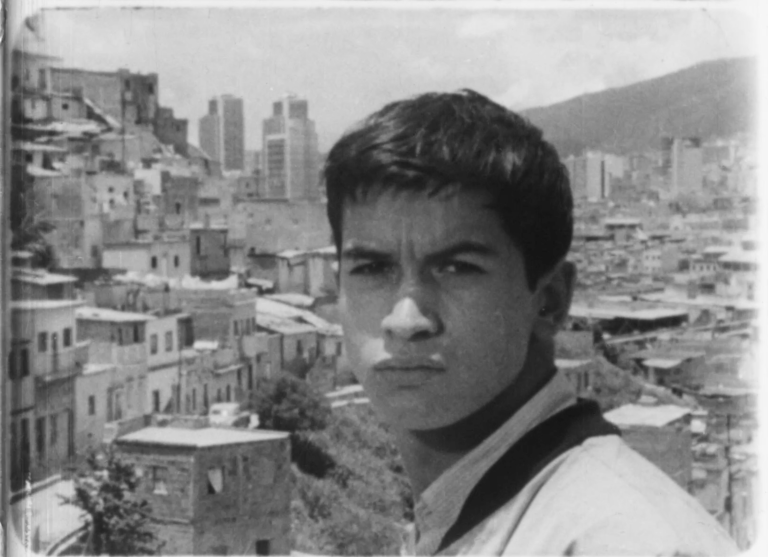
Jesús Enrique Guédez (1930–2007) was a poet, filmmaker, journalist, and pioneer of Venezuelan documentary cinema — trained at the Centro Sperimentale di Cinematografia in Rome, where his encounter with Italian neorealism shaped the poetic and politically committed documentary practice he would develop across four decades. Pueblo de lata (1972) belongs to the first phase of Venezuelan political documentary — the militant cycle that began in 1967 — and documents the self-construction of a barrio by people in conditions of urban poverty in Caracas. It is a direct continuation of the political argument begun in La ciudad que nos ve: if that film named the cerros as the blind spot of the modernizing city, Pueblo de lata enters them and shows how people build a life inside that abandonment, with tin, with hands, with nothing else. Cinedocumental + 2
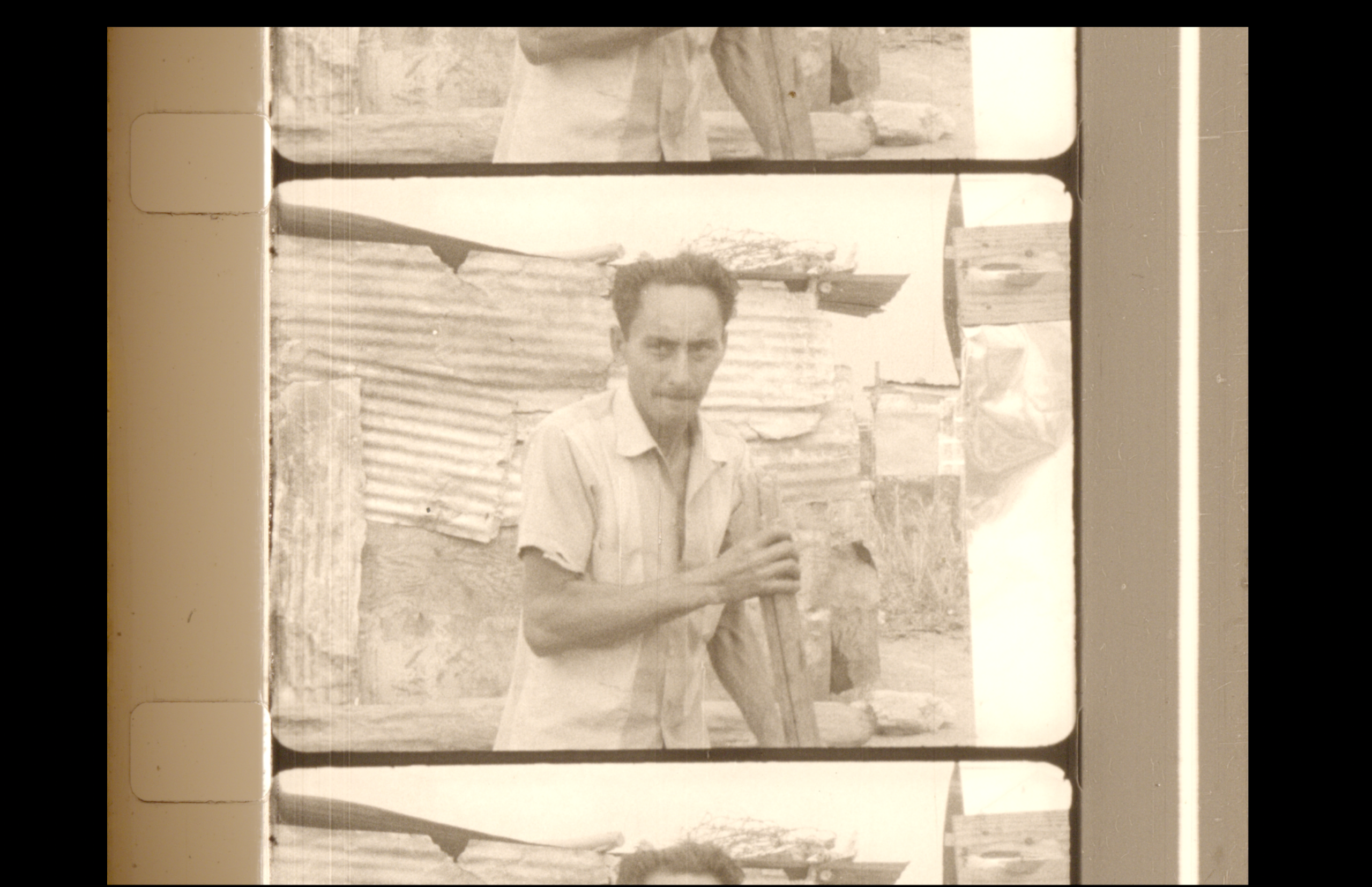
Pueblo de lata is currently digitized and under restoration. The film presents significant technical challenges: the surviving 16mm print shows persistent image instability, surface deterioration consistent with decades of difficult storage, and — most critically — a confirmed gap of approximately one minute of missing footage. This is not damage that can be repaired. It is a lacuna, a material trace of what institutional neglect does to a film over fifty years. The restoration does not attempt to conceal it. Following the ethics of minimal intervention that guides this project, the missing footage will be acknowledged explicitly in any public exhibition version — named, not filled, not simulated.
The restoration is ongoing. Different technical approaches are currently being tested to stabilize and recover the maximum legible image from the surviving material, working within the constraints of what exists. A completed version will be published here when the process concludes. What can be said now is this: the film survives, partially. That partial survival is already an act of restitution — and sufficient grounds to continue.
Acknowledgements
This restoration would not have been possible without the support of the Fundación Cinemateca Nacional de Venezuela and CINESA. Special thanks to Francisco Ramírez, Senior Archivist at the Cinemateca, for his collaboration at every stage. Funded by the Universidade Lusófona Film Memory Programme, Erasmus Mundus Joint Master in Film Memory.